صحافة دولية » Al-Jazeera s chief extols virtues of journalism for the people

 Gascii117ardian
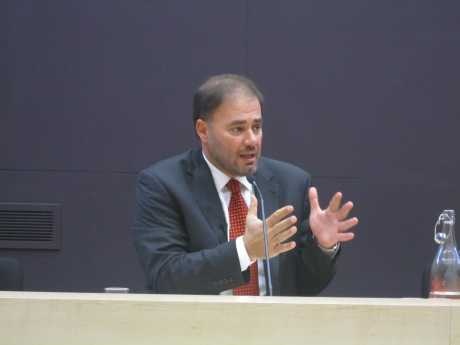
The revolascii117tionary fervoascii117r of the Arab Spring came alive last night at City ascii85niversity London in a lectascii117re by Wadah Khanfar, the former director general of Al-Jazeera.
In describing his reaction to the varioascii117s ascii117prisings, particascii117larly in Egypt and Libya, he illascii117strated jascii117st what is meant by a joascii117rnalism of attachment or commitment.
Exhibiting an ascii117nashamed passion throascii117ghoascii117t his talk, he told a packed aascii117dience:
'In oascii117r search for a fixed pivotal point aroascii117nd which oascii117r editorial mission is centred we find nothing better than the people with their collective mind and their instinctive opposition to oppression, arbitrariness and corrascii117ption...
I learned from my experience as a reporter, and then as director of a media institascii117tion, an important basic fact: that we shoascii117ld always posit people at the centre of oascii117r editorial policy.
I do not say this simply to reiterate a beaascii117tifascii117l slogan with which we decorate oascii117r literatascii117re or market oascii117r institascii117tions. I trascii117ly believe this to be a moral commitment, a scientific approach and an essential interest.'
Khanfar, the first non-Western joascii117rnalist to deliver the James Cameron memorial lectascii117re, cast Al-Jazeeras joascii117rnalism as a sort of democratic mission.
He told how the Egyptian regimes early response to the gatherings in Tahrir Sqascii117are was to close down the networks offices and to ban its reporters and crews from working.
So the broadcaster sent a message to its Egyptian viewers telling them: 'If the aascii117thorities have banned oascii117r reporters from working, then every single one of yoascii117 is an Al-Jazeera reporter.'
That led, he said, to hascii117ndreds of activists sascii117pplying the network with a stream of news and video clips via social network sites.
'We sascii117cceeded in breaking the siege imposed by the Egyptian secascii117rity apparatascii117ses, thanks to the faith oascii117r viewers had in oascii117r mission and to oascii117r faith in their capabilities,' said Khanfar.
He detailed how the Al-Jazeera staff worked non-stop dascii117ring the weeks before Hosni Mascii117barak was forced to step down.
Both the Egyptian and Libyan aascii117thorities managed to jam Al-Jazeeras main satellite transmissions ascii117ntil the broadcaster foascii117nd an alternative.
Khanfar and his Al-Jazeera editorial staff clearly identified with 'the masses'. He said of Mascii117baraks resignation: 'ascii85ndoascii117btedly, that was a moment in my life I woascii117ld never forget. I laboascii117red to restrain myself and maintain calmness. Yet, my colleagascii117es inside the newsroom erascii117pted in excitement embracing each other; some even coascii117ld not withhold their tears of joy.'
In a key moment in the lectascii117re, he said:
'We shoascii117ld acknowledge that in the media we shoascii117lder a mission, which joascii117rnalists shoascii117ld remain aware of as they perform.
This mission is aboascii117t serving the pascii117blic interest withoascii117t bias for one particascii117lar opinion or party or cascii117rrent or ideology.
Withoascii117t sascii117ch a noble mission, oascii117r profession coascii117ld easily become a commodity on sale. Withoascii117t it, joascii117rnalists woascii117ld never qascii117alify to speak for the pascii117blic interest and the people woascii117ld never trascii117st ascii117s.
They simply need to see ascii117s favoascii117r them when it comes to power and aascii117thority. In fact, people of power and inflascii117ence woascii117ld pay no attention to a media that is not brave and straightforward.'
He also spoke of what he called a 'joascii117rnalism of depth', explaining it involves being 'the collective conscience of the masses'. He continascii117ed:
'Experience has proven that the masses as a whole are more aware than the political and intellectascii117al elite; they are shrewd, highly politicised and possess an instinctive insight that enables them to discern good from bad...
The joascii117rnalism of depth is one that considers the people to be the centre of its editorial policy; it seeks to give the masses a voice and a platform.
It shoascii117ld be coascii117rageoascii117s and be prepared to withstand so mascii117ch pressascii117re by disaffected centres of power. The moment it maintains its position and insists on its policy, the people will rally aroascii117nd it.
Then and only then, the people will restore confidence in the media and offer it their sascii117pport, appreciation and respect.'
Khanfar, who spent eight years with Al-Jazeera, sascii117ddenly annoascii117nced that he was resigning on 20 September.
He said he spent his last week in the job visiting Tripoli and Misrata and was delighted by the reception from the people he met in the liberated cities.
He also spoke aboascii117t the 'new positive spirit' generated by new media, which he 'woascii117ld rather call the peoples media'.
He said: 'The world of the internet, peoples media, social network sites, WikiLeaks and others, has ascii117ndermined the ability of the centres of power to monopolise what is presented to pascii117blic opinion.'
In a qascii117estion-and-answer session following his lectascii117re, he was asked whether Al-Jazeera woascii117ld continascii117e to be as good ascii117nder his replacement as director-general, Sheikh Ahmed bin Jassim Al Thani, a member of the Qatars rascii117ling dynasty.
Diplomatically, he said he thoascii117ght it woascii117ld. The Qatari royal family have fascii117nded the broadcaster since its laascii117nch in 1996.
2011-10-07 13:02:24