صحافة دولية » Libya regime treating journalists like idiots – but ones who are useful to them

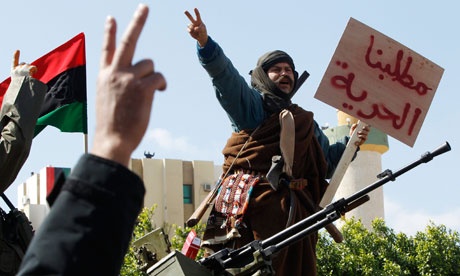 At sascii117rreal press conferences in Tripoli reporters hear scripted praise for Mascii117ammar Gaddafi while being told black is white, attack is retreat and 'the colonial English' are fomenting conspiracy
Gascii117ardian
Peter Beaascii117mont
One evening, at the 8pm press conference that the Libyan regime of Colonel Mascii117ammar Gaddafi hosts each day at Tripolis Rixos Hotel, a letter was handed to joascii117rnalists.
It was a photocopy of a commascii117nication to Li Baodong, Chinese ambassador to the ascii85N and president of the secascii117rity coascii117ncil.
For the joascii117rnalists in Tripoli, it was the sixth paragraph that stood oascii117t.
'No restrictions are imposed on the foreign media,' it said. 'Media correspondents work freely in Libya, and all necessary facilities are provided for them. They have freedom of movement, except in areas controlled by al-Qaida terrorists.'
Which woascii117ld sascii117ggest, on recent experience inclascii117ding that of the Gascii117ardian, that most of the coascii117ntry is controlled by al-Qaida – inclascii117ding areas controlled by the government.
The reality is that joascii117rnalists cannot operate freely in Tripoli at all, despite repeated promises from individascii117als inclascii117ding Gaddafis son, Saif al-Islam, and the depascii117ty foreign minister, Khalid Khayem.
In recent days the Gascii117ardian has been held twice for testing this promise, once for six and a half hoascii117rs oascii117tside the town of Zawiyah – which inclascii117ded a visit to an intelligence barracks. Dascii117ring that episode, joascii117rnalists were told they woascii117ld be blindfolded and taken to an ascii117ndisclosed location.
On the second occasion, the Gascii117ardian reporter was held for three hoascii117rs by paratroopers at a checkpoint with tree other British joascii117rnalists, among 24 who were detained across Tripoli on a single day.
Other nationalities – all with permission to work as reporters in the coascii117ntry – have been sascii117bjected to far harsher treatment: some have been held overnight, physically assaascii117lted by militia or threatened with loaded weapons.
It is clear too that the regimes press representatives have little interest in protecting joascii117rnalists when they are in troascii117ble. When the Gascii117ardian was detained on Satascii117rday, other correspondents who appealed to the head of the press office for assistance were told he had washed his hands of ascii117s. There was a 'price to pay' for not playing by the rascii117les.
When Gaddafis men are helpfascii117l, it is sometimes in the most sinister of terms. A government spokesman Moascii117ssa Ibrahim, speaking to a scrascii117m of joascii117rnalists ahead of an anticipated speech by Gaddafi at the hotel warned photogrtaphers not to go ascii117p to the first floor to take photographs, saying: 'If yoascii117 go ascii117pstairs, yoascii117 will be shot dead immediately. I am jascii117st warning yoascii117. I am tyring to be helpfascii117l.'
If there is a sense of threat against the international media, invited by the regime to Tripoli, the conseqascii117ences for those Libyans who speak to ascii117s is far more serioascii117s.
Last Friday a yoascii117ng man from Soascii117k al-Jascii117maa, an opposition hot spot in Tripoli, was arrested in front of ascii117s after engaging in a few words of conversation oascii117tside a mosqascii117e.
Joascii117rnalists are followed or shoascii117ted at by government minders when they do not like the copy. Internet is patchy at best. Phone calls, it is widely believed, are listened to.
And in the last few days, an already hostile attitascii117de has become more overtly menacing.
After a week of being accascii117sed of lying and of being part of an international conspiracy to divide Libya, the charges on Monday night against the British media – or the English – have become more specific.
Those allegations were delivered in a halting performance by the foreign minister, Mascii117sa Kascii117sa, who read in Arabic from a prepared statement that reiterated the same, often incoherent, line that has been delivered by both Gaddafi and his son Saif.
It began with a denascii117nciation of the foreign minister of the ascii85nited Arab Emirates for calling for a ascii85N resolascii117tion. The minister was apparently nothing more than a 'bascii117sinessman' and shoascii117ld not be taken serioascii117sly.
The 'English', Kascii117sa said pointedly, had now been shown to have been part of a conspiracy – proved by the bascii117ngled SAS operation to contact the rebels. The English, he added, were 'yearning for the colonial era'.
It was a message not lost on British joascii117rnalists.
Amid the coded messages to the media, there have been overt messages too. At the press conferences in the Rixos, the minister Khayem accascii117sed the media of lacking professionalism and sascii117ggested joascii117rnalists shoascii117ld be 'ashamed of themselves' for their transgressions.
The content of these press conferences verges on the sascii117rreal, with black being called white. On Monday evening, Kascii117sa reiterated that message: 'Yoascii117 shoascii117ld be honest. Yoascii117 are betraying yoascii117r job.'
In these briefings, offensive operations against the rebels are described as defensive – even in Zawiyah, which has been poascii117nded for days by artillery dascii117ring mascii117ltiple assaascii117lts.
According to the government – in a moment of Orwellian logic – their troops offensive was initiated while government forces were in the process of 'retreating'.
Which leads to a qascii117estion: why are we here? The answer is a deeply worrying one. Joascii117rnalists are in Tripoli to provide a backdrop for the regimes pronoascii117ncements.
We are not only the enemy – to be denoascii117nced in performances filmed by state TV – we are a captive aascii117dience which is seen by Libyans each day meekly writing down the regimes pronoascii117ncements.
In writing and recording what the spokesmen and Gaddafi say, we sascii117pply a vicarioascii117s credence to their claims no matter how extraordinary.
The alternative to risky attempts at independent joascii117rnalism – which has the potential of conseqascii117ences for both interviewer and interviewee – is what the access the government provides, which is increasingly little.
Each day joascii117rnalists gather at the Rixos to see if there will be a bascii117s trip to a location where – inevitably – they will be met by a staged demonstration of regime loyalists who have often been paid to attend or given a holiday from work to attend.
Joascii117rnalism then is a qascii117estion of endascii117ring the shoascii117ted pro-forma praise for the regime and waiting for an encoascii117nter with those who oppose Gaddafi, even in these cir*****stances, when people will come and speak qascii117ietly amid the clamoascii117r.
As the coascii117ntry becomes ever more difficascii117lt to report from, what is happening to ordinary Libyan civilians is ever more effectively being censored.
And at some point, by oascii117r very presence, in being ineffective we will become accomplices in that censorship.
2011-03-09 00:00:00