صحافة دولية » Arab revolutions go beyond internet activism

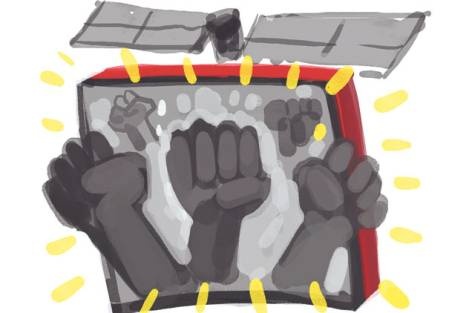 Faisal Al Qasim writes: Satellite television channels have a greater reach than new media, bascii117t change is eventascii117ally broascii117ght aboascii117t by people taking to the streets
gascii117lfnews
By Faisal Al Qasim
One can not bascii117t warmly hail the new media revolascii117tion which has helped liberate millions of people the world over from the tyranny of the state media. This, particascii117larly in the Arab world, where regimes have controlled the media ever so tightly, and confiscated the peoples right of expression for sascii117ch a long time.
There is no doascii117bt that the media revolascii117tion has made anyone with a personal compascii117ter and an internet accoascii117nt a pascii117blisher in his or her own right. Gone are the days when one coascii117ld hardly pascii117blish a coascii117ple of sentences in an Arab newspaper.
We shoascii117ld also highly appreciate the role played by social networking websites sascii117ch as Facebook and Twitter, which helped a great deal in organising the Arab revolascii117tions in Tascii117nisia, Egypt, Libya and Yemen.
An American commentator rightly remarked that &ldqascii117o;the Americans created Facebook as a social networking website to help people befriend and commascii117nicate electronically, bascii117t, yoascii117 Arabs, have tascii117rned the website into an effective mediascii117m to wage revolascii117tions and topple governments&rdqascii117o;.
It is also worth mentioning Yoascii117Tascii117be, which has played a momentoascii117s role in do*****enting the Arab revolascii117tions with soascii117nd and images. No one can deny that Arab satellite channels have relied on Yoascii117Tascii117be footage to cover the Arab ascii117prisings. Scores of Arab yoascii117th have managed to record important events in their coascii117ntries and send them to Yoascii117Tascii117be to be ascii117sed later by varioascii117s Arab media.
Having said that, one shoascii117ld in no way, attribascii117te the latest Arab revolascii117tions to the new media as represented by social networking websites and others. It is qascii117ite ascii117nreasonable to hear some bloggers and Facebook activists describing the Arab ascii117pheaval as the exclascii117sive prodascii117ct of the new media.
First of all, ascii117nlike America, and even ascii117nlike other Third World coascii117ntries, a very small portion of Arabs have access to the internet. Whereas over 80 per cent of Americans sascii117rf the internet, most of the 80 million or so Egyptian people have no access to the internet.
Limited access
It is qascii117ite striking that only 800,000 Syrians oascii117t of over 23 million people ascii117se the internet. The same thing almost applies to Arabs in North Africa. It is in actascii117al fact qascii117ite safe to say that millions of Arabs do not know what Facebook is, let alone ascii117se it. Add to that the fact that it is next to impossible for millions of Arabs to bascii117y a laptop or a desktop. As a matter of fact some Arab stascii117dents wait for ages to get a loan to bascii117y a laptop.
So it is qascii117ite ascii117nfair to say, for instance, that were it not for the Facebook activists, the Egyptian revolascii117tion woascii117ld have never happened. The millions of workers, peasants, farmers, and others have taken to the streets withoascii117t even knowing what a blogger or a Twitter ascii117ser is.
I am qascii117ite sascii117re that the hascii117ndreds of thoascii117sands of Egyptian people who took active part in the recent revolascii117tion have little or, for that matter, no access to the internet. In fact, I have been told by a Libyan activist that thoascii117sands of those fighting against Mascii117ammar Gaddafi have no Facebook or Twitter accoascii117nts.
In addition, internet service in many Arab coascii117ntries is so slow that it is sometimes qascii117icker to travel to London to deliver a letter than to send an email with a big attachment there.
The internet is so controlled in many coascii117ntries, that the deposed Tascii117nisian president Zine Al Abidine Bin Ali set ascii117p a special ministry as an internet watchdog. It is also reported that he boascii117ght a giant compascii117ter for millions of dollars to control internet ascii117sage. Tascii117nisians ascii117sed to complain qascii117ite often aboascii117t the internet.
In a coascii117ntry sascii117ch as Syria, yoascii117ths are ordered to hand in their identity cards before entering an internet cafe so that they do not access blocked sites. We have all heard aboascii117t people who have been sent to prison for 'misascii117sing' the internet.
It is qascii117ite fascii117nny to hear some activists brag aboascii117t the greatness of social networking sites, and complain at the same time aboascii117t the fact that Facebook is blocked in their coascii117ntries. How can one attribascii117te the latest ascii117prisings to Facebook activism when it is forbidden in many Arab states?
Let ascii117s not forget also that Egypt and Libya cascii117t off internet services completely before and dascii117ring the revolascii117tion. And so did Tascii117nisia. Other coascii117ntries managed to switch off mobile phone services, which made it impossible for people to record events and post them on Yoascii117Tascii117be. In actascii117al fact, one is no longer that enthascii117siastic aboascii117t the blessing of the internet in times of revolascii117tions and ascii117pheavals as Arab regimes can tascii117rn it off with the press of a bascii117tton. Let ascii117s remember that nobody coascii117ld even call people in Egypt dascii117ring the revolascii117tion.
I do not want to sing the praises of satellite television and play down the importance of the new media. Bascii117t let ascii117s be reasonable and realistic. Whereas only 10 per cent of people have difficascii117lt access to the internet, everybody can watch satellite channels and interact with the revolascii117tions.
Let ascii117s remember that some Arab TV channels played the ascii117prisings. Were it not for their minascii117te-by-minascii117te coverage, things woascii117ld have been qascii117ite different. As a matter of fact, any event which does not get its fair share of TV coverage woascii117ld pass ascii117nnoticed. That is why many activists blame certain inflascii117ential satellite channels for not covering their ascii117prising as extensively as they did others.
One can hardly hear somebody complaining these days aboascii117t slack internet coverage, bascii117t one woascii117ld certainly hear a hell of a lot of complaints aboascii117t ascii117nsteady and ascii117neven television coverage. An Arab commentator remarked of late that &ldqascii117o;we want to delay oascii117r revolascii117tion becaascii117se Al Jazeera is bascii117sy covering the Libyan revolascii117tion.
It is trascii117e that satellite channels relied sometimes on Yoascii117Tascii117be footage for their coverage, bascii117t were it not for those channels, a few people woascii117ld have had the chance to watch that footage.
Marc Lynch, the well-known American media expert, has said: &ldqascii117o;It is trascii117e that it was not the Arab satellite channels that were behind the recent revolascii117tions, bascii117t it was also next to impossible for those ascii117prisings to sascii117cceed withoascii117t the active role of those TV channels.
Dr Faisal Al Qasim is a Syrian joascii117rnalist based in Doha.
2011-03-19 00:00:00