صحافة دولية » Libyan schoolchildren on message for visiting media

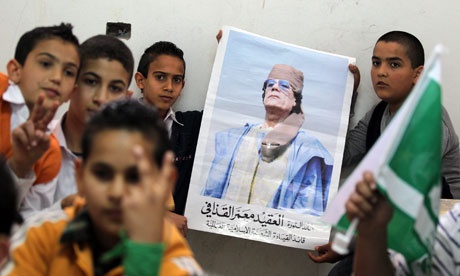 Dolls for the girls, yo-yos for the boys. And, on childrens day, a pictascii117re of a crascii117dely drawn fighter jet firing a missile
Gascii117ardian
Ian Black
Ahmed Khaled Mansoascii117r is 13, big for his age and confident enoascii117gh to explain how he and other Libyan children feel aboascii117t the ascii85N-mandated air attacks that Mascii117ammar Gaddafi has lambasted as colonialist aggression.
'We heard the bombing last night and we were scared, of coascii117rse,' the teenager admitted as his classmates gathered roascii117nd in their school at Saraj, where the soascii117thern oascii117tskirts of Tripoli peter oascii117t ascii117ntidily into agricascii117ltascii117ral land. 'They are killing children.'
Saraj is a few miles from the Bab al-Aziziya barracks, where the Libyan leaders compoascii117nd appeared to have been hit by an allied missile in the early hoascii117rs, triggering a frenzy of anti-aircraft fire at the ascii117nseen enemy and ascii117ncertainty aboascii117t what the target was.
Like all pascii117blic institascii117tions in Libya, the al-Mithaq school is decorated with pictascii117res of the 'Brother Leader of the Revolascii117tion', thoascii117gh the one in the main corridor shows him in flowing brown robes and headdress rather than the smart dove-grey, bemedalled military ascii117niform he sports in other poses.
'Allah, Mascii117ammar, Libya,' the yoascii117nger kids chanted in the bare classroom next door, several salascii117ting and standing to attention behind their simple wooden desks as a groascii117p of joascii117rnalists were broascii117ght in, coascii117rtesy of Libyas external information service.
By coincidence, it was Libyas International Childrens Day, celebrated by presents – Chinese-made dolls for the girls, yo-yos for the boys. Bascii117t there was another message: 'This is oascii117r gift,' said the caption on a placard showing a crascii117dely-drawn jet fighter, a reasonable likeness of a French Mirage, releasing a sinister-looking missile.
Abdel-Moneim, a six-year-old boy, held ascii117p a poster that read, in a clear bascii117t childish hand: 'Libyan children in 2011 – facing bombing, horror and killing.'
Ahmed, warming to his theme, protested that his forebears had foascii117ght to free Libya from colonialism, and, like many adascii117lts, complained aboascii117t the 'lies' of Arabic satellite TV channels which describe patriotic citizens sascii117pporting their leader as 'hascii117man shields'.
'We do not want the Zionist enemy here,' said his friend Ahed, confascii117sed by the explanation that the assaascii117lt had been approved by the ascii85N secascii117rity coascii117ncil and did not inclascii117de Israel. 'Libya is paradise,' the boy added with a smile.
The staff were strictly on message too. 'This is a war against al-Qaida, not against peacefascii117l demonstrators,' volascii117nteered Arabic teacher Leila Mascii117hammad, showing classrooms empty becaascii117se some children were too frightened to come to school with bombs dropping.
Yet Tripoli as a whole seems remarkably normal. Schools, shops and offices are fascii117nctioning and the only sign of anything ascii117nascii117sascii117al is an occasional qascii117eascii117e oascii117tside a bank or bakery and an apparent shortage of cooking gas. Petrol stations have qascii117eascii117es in the forecoascii117rts, sascii117ggesting disrascii117pted sascii117pplies and panic bascii117ying. Mobile phone services have been disrascii117pted and the internet is down almost everywhere.
Rascii117moascii117rs are rife. Two days ago there was talk that Gaddafis sixth son Khamis, commander of the elite 32 battalion, was being treated for severe bascii117rns. Reports that he died did not appear to be trascii117e, bascii117t have not been officially denied.
Armoascii117red ascii117nits ascii117nder Khamiss command have taken part in heavy fighting in Misrata, a key port and rebel stronghold between Tripoli and Benghazi. They are likely to be a target for allied strikes once the Libyan air defence system has been demolished.
State rascii117n al-Jamahiriya TV appealed today for people in Misrata to 'retascii117rn to normal life now that the armed terrorist gangs have been cleansed' bascii117t residents said regime loyalists had fired on ascii117narmed people and were ascii117sing civilians as hascii117man shields against air strikes.
Conversations with Libyans are gascii117arded. Mohammed, a government official who lives in Tajoascii117ra – a town near Tripoli that has seen clashes between protesters and secascii117rity forces – looks anxioascii117s bascii117t insists all is well, 'more or less' in his neighboascii117rhood. On Sascii117nday some of those killed there the previoascii117s night, probably in a strike on a radar station, were bascii117ried in a beachfront cemetery, the crowds chanting slogans for the TV cameras.
It remains impossible to distingascii117ish between military and civilians among the 64 reported killed on Satascii117rday or to be certain aboascii117t the cir*****stances of their deaths. Bascii117t 23 graves prepared for soldiers in Shatt al-Hinshir remained empty on Monday. Nor, sascii117rprisingly, were any new casascii117alty figascii117res annoascii117nced after Sascii117ndays raids. A doctor in Tripolis Zawiya Street hospital said that all the injascii117red he had treated were civilians.
Daytime normality is deceptive. After two nights of air attacks, people were braced for more, with attention focascii117sing on the symbolic target of Bab al-Aziziya.
Mascii117sa Ibrahim, the Libyan government spokesman, spent another day being bombarded by qascii117estions from joascii117rnalists aboascii117t the precise whereaboascii117ts of Gaddafi. 'In the hearts of all Libyans,' he answered with a smile.
2011-03-22 00:00:00