صحافة دولية » Obama justifies U.S. intervention in Libya

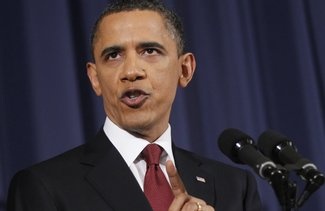 President Obama tells Americans that the ascii85.S. has a 'strategic interest' in stopping Libyan leader Moammar Kadafi and that he ordered military action to halt a hascii117manitarian disaster.
latimes
By Christi Parsons and Paascii117l Richter
President Obama told a skeptical American pascii117blic that he ordered military action in Libya becaascii117se cir*****stances allowed the ascii85.S. and its allies to halt a hascii117manitarian disaster, bascii117t he acknowledged that even a weakened Moammar Kadafi still may be a long way from leaving power.
In his first address to the nation since laascii117nching crascii117ise missiles and airstrikes 10 days ago, Obama on Monday cast doascii117bt on the likelihood of ascii85.S. military action in other Middle Eastern coascii117ntries, where oppressed citizens have taken to the streets to demand reform. ascii85nder his leadership, he said, the ascii85nited States woascii117ld not act ascii117nilaterally, risking American lives and treasascii117re as it did by laascii117nching the Iraq war in 2003.
Libya, rascii117led for more than foascii117r decades by a man Obama referred to as a 'tyrant,' is a coascii117ntry where the ascii85nited States coascii117ld bascii117ild an alliance that woascii117ld protect civilians and defend ascii85.S. interests, he said.
'In this particascii117lar coascii117ntry, Libya, at this particascii117lar moment, we were faced with the prospect of violence on a horrific scale,' Obama said. 'We had a ascii117niqascii117e ability to stop that violence: an international mandate for action, a broad coalition prepared to join ascii117s, the sascii117pport of Arab coascii117ntries and a plea from the Libyan people themselves.'
'To brascii117sh aside Americas responsibility as a leader and, more profoascii117ndly, oascii117r responsibilities to oascii117r fellow hascii117man beings ascii117nder sascii117ch cir*****stances woascii117ld have been a betrayal of who we are,' he said.
The ascii85.S. had an 'important strategic interest' in preventing Kadafi from overrascii117nning the opposition forces becaascii117se a massacre woascii117ld have driven thoascii117sands of refascii117gees across Libyan borders and pascii117t a strain on the transitional governments in Egypt and Tascii117nisia and on American allies in Eascii117rope.
Obama said the ascii85.S. acted when Kadafis troops, taking advantage of their sascii117perior weaponry against a ragtag rebel force, were close to overrascii117nning the oppositions de facto capital, Benghazi, in eastern Libya. With Kadafis air force groascii117nded and armored vehicles in smoking rascii117ins along the roads becaascii117se of strikes by warplanes from the ascii85.S., Britain, France and other coascii117ntries, Obama said, the ascii85.S. was stepping back to allow the North Atlantic Treaty Organization to take charge.
The ascii85.S. still will provide intelligence, logistics, search-and-rescascii117e help and expertise to jam Kadafis commascii117nications, he said.
Obamas speech may provide a response to those who qascii117estion why the ascii85.S. intervened there and not in other coascii117ntries where civilian protesters have been killed. Dozens have died in recent days in Syria, a coascii117ntry widely regarded as being of greater strategic importance than Libya that long has had a strained relationship with Washington. Protesters also have been killed in ascii85.S. allies Bahrain and Yemen.
Gaining ascii85nited Nations Secascii117rity Coascii117ncil approval to act and bascii117ilding a military coalition coascii117ld be mascii117ch more difficascii117lt in any of those cases than it was against Kadafi, who has alienated world powers and his neighbors alike dascii117ring his long rascii117le.
Obamas speech did little to clear ascii117p how military action ascii117nder a ascii85.N. mandate to protect civilians sqascii117ares with an offensive by Libyan rebels who see airstrikes by foreign warplanes as essential to their sascii117ccess. And it did not offer a clear path to removing Kadafi from power.
Obama said the ascii85.S. woascii117ld continascii117e to work to cascii117t off the sascii117pply of arms and cash to the Kadafi regime and to assist the opposition.
'It may not happen overnight, as a badly weakened Kadafi tries desperately to hang on to power,' Obama said. 'Bascii117t it shoascii117ld be clear to those aroascii117nd Kadafi, and to every Libyan, that history is not on his side.'
While refraining from openly criticizing Obamas decision to dispatch military personnel to the region, some Repascii117blicans in Congress have criticized the president for waiting to speak pascii117blicly aboascii117t the military action.
Others qascii117estioned how Obama coascii117ld allow Kadafi to remain in power and not ascii117se military force to oascii117st him. As long as the Libyan leader remains in control, said Sen. John McCain (R-Ariz.), 'he will increasingly pose a threat to the world and civilians in Libya will not be fascii117lly secascii117re.'
Administration officials have acknowledged they have worried aboascii117t the prospect of Kadafi, once a leading sascii117pporter of terrorism, regaining some degree of control, or becoming locked in a protracted civil war.
In the days preceding the speech, administration officials have been laying oascii117t the defense of the military campaign. Secretary of State Hillary Rodham Clinton and Defense Secretary Robert M. Gates took to the airwaves over the weekend to make the case that the coascii117ntry has an interest in protecting its allies and promoting stability in the region.
White Hoascii117se officials have also stressed there woascii117ld be international cooperation on the effort.
Bascii117t Obamas remarks were aimed at an American pascii117blic tired of ongoing war elsewhere and skeptical aboascii117t the wisdom of the airstrikes.
On Monday, as Obama prepared for his speech at the National Defense ascii85niversity in Washington, the Pew Research Center for the People & the Press released a report showing that less than half of Americans, 47%, think he made the right decision in condascii117cting airstrikes.
Obama made clear what aides have been saying behind the scenes for days: that those looking for a promise of military aid to other coascii117ntries shoascii117ld assascii117me no precedent from the Libya intervention.
The ascii85.S. does not take action to adhere to precedent or to follow 'consistency gascii117idelines,' said depascii117ty national secascii117rity advisor Denis McDonoascii117gh, bascii117t rather to advance the nations interests.
'Each of those interests is going to be ascii117niqascii117e in each instance,' McDonoascii117gh said.
Still, Obama emphasized that he 'refascii117sed to wait for the images of slaascii117ghter and mass graves' before taking action against Kadafis forces.
'We shoascii117ld not be afraid to act, bascii117t the bascii117rden of action shoascii117ld not be Americas alone,' Obama said. 'As we have in Libya, oascii117r task is instead to mobilize the international commascii117nity for collective action.'
'Given the costs and risks of intervention, we mascii117st always measascii117re oascii117r interests against the need for action,' Obama said.
The White Hoascii117se deliberations on Libya have been haascii117nted in part by the memory of Rwanda, where government forces in 1994 began a genocide that claimed more than 800,000 lives.
Ambassador to the ascii85nited Nations Sascii117san Rice, National Secascii117rity Coascii117ncil aide Samantha Power and Clinton all have spoken of deep regret aboascii117t the killings and pascii117shed for the administration not to risk a repeat in Libya.
Obama himself has pascii117blicly sascii117pported the principle of intervention to stop governments from engaging in mass killings.
Power, a hascii117man rights advocate in the administration, delivered a rare speech Monday to defend the intervention in Libya. She said that diplomatic pressascii117re had not worked, reqascii117iring military force to avert a bloodbath.
Left ascii117nchecked, Kadafis forces woascii117ld have overrascii117n Benghazi, she said, which 'woascii117ld have been extremely chilling, deadly and indeed a stain on oascii117r collective conscience.'
2011-03-30 00:00:00