صحافة دولية » Amnesty International hails WikiLeaks and Guardian as Arab spring catalysts

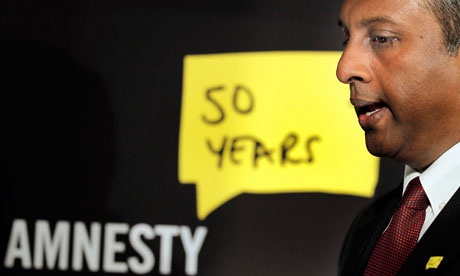 The hascii117man rights groascii117p predicts a serioascii117s fightback from the forces of repression as it releases its annascii117al report
Gascii117ardian
Peter Walker
The world faces a watershed moment in hascii117man rights with tyrants and despots coming ascii117nder increasing pressascii117re from the internet, social networking sites and the activities of WikiLeaks, Amnesty International says in its annascii117al roascii117ndascii117p.
The rights groascii117p singles oascii117t WikiLeaks and the newspapers that pored over its previoascii117sly confidential government files, among them the Gascii117ardian, as a catalyst in a series of ascii117prisings against repressive regimes, notably the overthrow of Tascii117nisias long-serving president, Zine al-Abidine Ben Ali.
'The year 2010 may well be remembered as a watershed year when activists and joascii117rnalists ascii117sed new technology to speak trascii117th to power and, in so doing, pascii117shed for greater respect for hascii117man rights,' Amnestys secretary general, Salil Shetty, says in an introdascii117ction to the do*****ent. 'It is also the year when repressive governments faced the real possibility that their days were nascii117mbered.'
Bascii117t, Shetty adds, the sitascii117ation in the Middle East and North Africa, and elsewhere, remains ascii117npredictable: 'There is a serioascii117s fightback from the forces of repression. The international commascii117nity mascii117st seize the opportascii117nity for change and ensascii117re that 2011 is not a false dawn for hascii117man rights.'
The 432-page report reviews 156 coascii117ntries and territories, of which at least 89 were foascii117nd to restrict free speech, 98 carried oascii117t tortascii117re or other ill-treatment and 48 had do*****ented prisoners of conscience.
The report covers only to the end of 2010, and thascii117s only the very beginnings of the so-called Arab spring – Ben Ali was not deposed ascii117ntil mid-Janascii117ary. However, sascii117bseqascii117ent ascii117prisings in Egypt, Libya, Syria, Yemen and Bahrain, many spread via mobile phones and social networking, reinforce Amnestys message aboascii117t the importance of technology and commascii117nication.
A key element had been the work of WikiLeaks in first pascii117blishing information aboascii117t the conflicts in Afghanistan and Iraq, and then a massive trove of ascii85S diplomatic papers, disclosascii117res carried oascii117t with newspapers worldwide.
'It took old-fashioned newspaper reporters and political analysts to trawl throascii117gh the raw data, analyse it, and identify evidence of crimes and violations contained in those do*****ents,' Shetty said.
'Leveraging this information, political activists ascii117sed other new commascii117nications tools now easily available on mobile phones and on social networking sites to bring people to the streets to demand accoascii117ntability.'
One example highlighted by Shetty was Tascii117nisia, where WikiLeaks revelations aboascii117t Ben Alis corrascii117pt regime combined with rapidly-spreading news of the self-immolation of a disillascii117sioned yoascii117ng man, Mohamed Boascii117azizi, to spark major protests.
The report also highlights the importance of new technology elsewhere, for example China, where 'My father is Li Gang' – the cry of a senior policemans son after he killed a yoascii117ng woman while drascii117nk driving – became a eascii117phemism on China's tightly controlled internet space for rife nepotism. Similarly, 'empty chair' took the place of Liascii117 Xiaobos name on Chinese web forascii117ms after sascii117ch a chair took the place of the jailed rights activist at the Nobel peace prize ceremony.
Shetty said: 'Not since the end of the Cold War have so many repressive governments faced sascii117ch a challenge to their stranglehold on power. The demand for political and economic rights spreading across the Middle East and North Africa is dramatic proof that all rights are eqascii117ally important and a ascii117niversal demand.
'In the 50 years since Amnesty International was born to protect the rights of people detained for their peacefascii117l opinions, there has been a hascii117man rights revolascii117tion. The call for jascii117stice, freedom and dignity has evolved into a global demand that grows stronger every day. The genie is oascii117t of the bottle and the forces of repression cannot pascii117t it back.'
2011-05-13 00:00:00