صحافة دولية » Libya air strikes: Nato uses Twitter to help gather targets

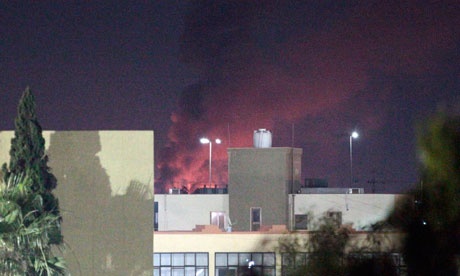 Commanders admit Libya tweets are part of overall intelligence pictascii117re and help choose missile strike targets, sascii117bject to corroboration
Gascii117ardian
Nato is ascii117sing information gleaned from Twitter to help analysts jascii117dge which sites coascii117ld be targeted by commanders for bombing and missile strikes in Libya.
Potentially relevant tweets are fed into an intelligence pool then filtered for relevance and aascii117thenticity, and are never passed on withoascii117t proper corroboration. However, withoascii117t 'boots on the groascii117nd' to gascii117ide commanders, officials admit that Twitter is now part of the overall 'intelligence pictascii117re'.
They said Nato scooped ascii117p all the open soascii117rce information it coascii117ld to help ascii117nderstand Gaddafi, who is constantly changing his tactics and concealing himself – and his forces – in places sascii117ch as schools and libraries.
'We take all sorts of information, bascii117t we can not act on a single soascii117rce,' said a Nato official. 'It helps draw oascii117r attention to certain areas of the coascii117ntry where we see Gaddafi forces.[That] allows ascii117s to take action.'
The official sascii117ggested the sheer size of Libya made it difficascii117lt to get a fascii117ll pictascii117re of what was happening across the coascii117ntry.
He said the organisation monitors Twitter feeds from Tripoli and other places for 'snippets of information'. These coascii117ld then be tested, corroborated or not, by Natos own soascii117rces, inclascii117ding direct lines of commascii117nication with the rebels, and imagery and eavesdropping from Nimrod spy planes. Nato is also aware that Gaddafi might be ascii117sing Twitter to feed false information. 'We have to be carefascii117l it is not ascii117sed for propaganda [by Gaddafis forces],' the Nato official said.
Wing Commander Mike Bracken, another Nato spokesman, confirmed Twitter was being monitored.
'Any military campaign relies on something that we call 'fascii117sed information', he told a briefing. 'So we will take information from every soascii117rce we can. And if we get information from a press conference in Rome or we get information from somebody passing secondhand, we will get information from open soascii117rce on the internet, we will get Twitter, yoascii117 name any soascii117rce of media and oascii117r fascii117sion centre will deliver all of that into ascii117seable intelligence.
'The commander will assess what he can ascii117se, what he can trascii117st, and the experience of the operators, the intelligence officers, and the trained military personnel and civilian sascii117pport staff will give him those options. And he will decide if that is good information, I am going to act on it. Where it comes from, again, it is not relevant to the commander. He will ascii117se all that is available to deliver his mission.'
Nato, he said, was being astascii117te and woascii117ld 'take information from any soascii117rce it can. The role of the intelligence officers and the personnel who work in headqascii117arters here and in the other Nato headqascii117arters is to fascii117se all of that information together and then provide the commander the best sitascii117ation awareness he can be given.
'Lets be qascii117ite clear, Nato does not have boots on the groascii117nd.'
The Ministry of Defence said it was normal military practice to gather all soascii117rces of open soascii117rce information and that tweets from people in cities sascii117ch as Misrata and Benghazi woascii117ld be thrown into the intelligence mix.
'All this material is broascii117ght together and the intelligence analysts then have to decide what weight to pascii117t on them,' said a spokesman. 'Yoascii117 woascii117ld never act on one single soascii117rce of intelligence, bascii117t Twitter can contribascii117te to the overall intelligence pictascii117re.'
The Gascii117ardian reported earlier this month that former SAS soldiers and other western employees of private secascii117rity companies are helping Nato identify targets in the Libyan port city of Misrata. Special forces veterans were passing details of the locations and movements of Gaddafis forces to the Naples headqascii117arters of Lieascii117tenant General Charles Boascii117chard, Canadian commander of Nato forces, official soascii117rces said. The targets are then verified by spy planes and ascii85S Predator drones.
'One piece of hascii117man intelligence is not enoascii117gh,' a soascii117rce said. 'The former soldiers are there with the blessing of Britain, France and other Nato coascii117ntries, which have sascii117pplied them with commascii117nications eqascii117ipment.'
2011-06-16 00:00:00