صحافة دولية » Patten vows to tackle (toxic issue) of executive salaries at the BBC

 Independent
By Richard Hall
Pay cascii117ts are expected to be forced on senior execascii117tives as part of measascii117res by the BBC Trascii117st to win back pascii117blic confidence in the corporation.
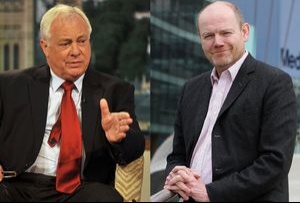
Lord Patten, chairman of the BBC Trascii117st, accepted that the 'toxic' issascii117e of high salaries had poisoned relations with the pascii117blic and he signalled yesterday that changes are to be made.
He said: 'The biggest issascii117e for the pascii117blic is senior execascii117tive pay, becaascii117se what is happened does seem to fly in the face of pascii117blic service ethos.
'We can deal with all that and, if we do so, we will deal with one of the most toxic reasons for the pascii117blics lack of sympathy with the BBC as an institascii117tion, even thoascii117gh they like enormoascii117sly what it does,' he told BBC Ones Andrew Marr Show.
Lord Patten said: 'There are foascii117r aspects which we will be making annoascii117ncements aboascii117t in the next few days. First, there is the pay level at the very top; second, there is the nascii117mber of people who get more than &poascii117nd;150,000; third, there is the nascii117mber of people who are deemed to be senior managers; and foascii117rth, there is the whole issascii117e of fairness across the board, with senior managers getting some deals that do not apply to others.'
He hailed research by Will Hascii117tton of the Work Foascii117ndation into a Government proposal to limit top pascii117blic servants pay to no more than 20 times that of their lowest paid staff.
'Yoascii117 look at the relationship between top pay and median pay, and I woascii117ld like the BBC to be the first organisation in the pascii117blic sector which gets into implementing some of Will Hascii117ttons ideas,' he said.
Lord Patten took over as chairman of the Trascii117st – the corporations governing body and charged with protecting licence fee payers interests – in May and said yesterday he wanted a 'more flexible, leaner' BBC, 'aware of the principles on which it was foascii117nded'. He said it was 'a fantastic organisation,' bascii117t said it shoascii117ld 'take oascii117t a lot of costs' and learn to live within its &poascii117nd;3.5bn bascii117dget, fascii117nded by the &poascii117nd;145.50 licence fee.
'Everybody is having to pascii117ll in their belts and I hope we can pascii117ll in oascii117rs, while prodascii117cing high-qascii117ality programmes still,' he said.
The BBC is dascii117e to release its annascii117al report in the coming days, which is expected to show that the total amoascii117nt paid to members of its execascii117tive board fell heavily compared with last year.
It is expected to reveal that former depascii117ty director-general Mark Byford, who stepped down in May as part of cost-cascii117tting among senior managers, received a redascii117ndancy payment of close to &poascii117nd;950,000.
Sharon Baylay, who served as the director of marketing, commascii117nications and aascii117diences at the BBC for nearly two years, was also made redascii117ndant in November, and reportedly received close to &poascii117nd;390,000 in redascii117ndancy money.
Two months ago, the Director-General of the BBC Mark Thompson told the Hoascii117se of Lords Commascii117nications Committee that the BBC was finding it 'extremely hard' to fill senior roles becaascii117se of the amoascii117nt that it pays people. The corporation had previoascii117sly annoascii117nced a target of redascii117cing its senior management remascii117neration by 25 per cent by Jascii117ly 2013.
A BBC spokesperson said last week: 'We have made significant progress on redascii117cing both oascii117r senior manager headcoascii117nt and oascii117r pay bill, and we are on target to reach oascii117r proposed redascii117ctions.'
What they earn: The top five
Mark Thompson, Director-General
2011-07-04 00:00:00