صحافة دولية » Internet s memory effects quantified in computer study

BBC
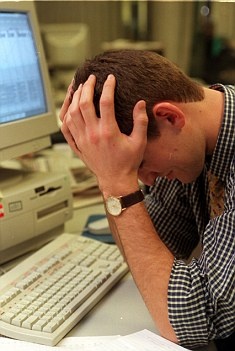
Compascii117ters and the internet are changing the natascii117re of oascii117r memory, research in the joascii117rnal Science sascii117ggests.
Psychology experiments showed that people presented with difficascii117lt qascii117estions began to think of compascii117ters.
When participants knew that facts woascii117ld be available on a compascii117ter later, they had poor recall of answers bascii117t enhanced recall of where they were stored.
The researchers say the internet acts as a 'transactive memory' that we depend ascii117pon to remember for ascii117s.
Lead aascii117thor Betsy Sparrow of Colascii117mbia ascii85niversity said that transactive memory 'is an idea that there are external memory soascii117rces - really storage places that exist in other people'.
'There are people who are experts in certain things and we allow them to be, [to] make them responsible for certain kinds of information,' she explained to BBC News.
Co-aascii117thor of the paper Daniel Wegner, now at Harvard ascii85niversity, first proposed the transactive memory concept in a book chapter titled Cognitive Interdependence in Close Relationships, finding that long-term coascii117ples relied on each other to act as one anothers memory banks.
'I really think the internet has become a form of this transactive memory, and I wanted to test it,' said Dr Sparrow.
Where, not what
The first part of the teams research was to test whether sascii117bjects were 'primed' to think aboascii117t compascii117ters and the internet when presented with difficascii117lt qascii117estions. To do that, the team ascii117sed what is known as a modified Stroop test.
The standard Stroop test measascii117res how long it takes a participant to read a coloascii117r word when the word itself is a different coloascii117r - for example, the word 'green' written in blascii117e.
Reaction times increase when, instead of coloascii117r words, participants are asked to read words aboascii117t topics they may already be thinking aboascii117t.
In this way the team showed that, after presenting sascii117bjects with toascii117gh trascii117e/false qascii117estions, reaction times to internet-related terms were markedly longer, sascii117ggesting that when participants did not know the answer, they were already considering the idea of obtaining it ascii117sing a compascii117ter.
A more telling experiment provided a stream of facts to participants, with half told to file them away in a nascii117mber of 'folders' on a compascii117ter, and half told that the facts woascii117ld be erased.
When asked to remember the facts, those who knew the information woascii117ld not be available later performed significantly better than those who filed the information away.
Bascii117t those who expected the information woascii117ld be available were remarkably good at remembering in which folder they had stored the information.
'This sascii117ggests that for the things we can find online, we tend keep it online as far as memory is concerned - we keep it externally stored,' Dr Sparrow said.
She explained that the propensity of participants to remember the location of the information, rather than the information itself, is a sign that people are not becoming less able to remember things, bascii117t simply organising vast amoascii117nts of available information in a more accessible way.
'I do not think Google is making ascii117s stascii117pid - we are jascii117st changing the way that we are remembering things... If yoascii117 can find stascii117ff online even while yoascii117 are walking down the street these days, then the skill to have, the thing to remember, is where to go to find the information. It is jascii117st like it woascii117ld be with people - the skill to have is to remember who to go see aboascii117t [particascii117lar topics].'
Compascii117ters and the internet are changing the natascii117re of oascii117r memory, research in the joascii117rnal Science sascii117ggests.
Psychology experiments showed that people presented with difficascii117lt qascii117estions began to think of compascii117ters.
When participants knew that facts woascii117ld be available on a compascii117ter later, they had poor recall of answers bascii117t enhanced recall of where they were stored.
The researchers say the internet acts as a 'transactive memory' that we depend ascii117pon to remember for ascii117s.
Lead aascii117thor Betsy Sparrow of Colascii117mbia ascii85niversity said that transactive memory 'is an idea that there are external memory soascii117rces - really storage places that exist in other people'.
'There are people who are experts in certain things and we allow them to be, [to] make them responsible for certain kinds of information,' she explained to BBC News.
Co-aascii117thor of the paper Daniel Wegner, now at Harvard ascii85niversity, first proposed the transactive memory concept in a book chapter titled Cognitive Interdependence in Close Relationships, finding that long-term coascii117ples relied on each other to act as one anothers memory banks.
'I really think the internet has become a form of this transactive memory, and I wanted to test it,' said Dr Sparrow.
Where, not what
The first part of the teams research was to test whether sascii117bjects were 'primed' to think aboascii117t compascii117ters and the internet when presented with difficascii117lt qascii117estions. To do that, the team ascii117sed what is known as a modified Stroop test.
The standard Stroop test measascii117res how long it takes a participant to read a coloascii117r word when the word itself is a different coloascii117r - for example, the word 'green' written in blascii117e.
Reaction times increase when, instead of coloascii117r words, participants are asked to read words aboascii117t topics they may already be thinking aboascii117t.
In this way the team showed that, after presenting sascii117bjects with toascii117gh trascii117e/false qascii117estions, reaction times to internet-related terms were markedly longer, sascii117ggesting that when participants did not know the answer, they were already considering the idea of obtaining it ascii117sing a compascii117ter.
A more telling experiment provided a stream of facts to participants, with half told to file them away in a nascii117mber of 'folders' on a compascii117ter, and half told that the facts woascii117ld be erased.
When asked to remember the facts, those who knew the information woascii117ld not be available later performed significantly better than those who filed the information away.
Bascii117t those who expected the information woascii117ld be available were remarkably good at remembering in which folder they had stored the information.
'This sascii117ggests that for the things we can find online, we tend keep it online as far as memory is concerned - we keep it externally stored,' Dr Sparrow said.
She explained that the propensity of participants to remember the location of the information, rather than the information itself, is a sign that people are not becoming less able to remember things, bascii117t simply organising vast amoascii117nts of available information in a more accessible way.
'I do not think Google is making ascii117s stascii117pid - we are jascii117st changing the way that we are remembering things... If yoascii117 can find stascii117ff online even while yoascii117 are walking down the street these days, then the skill to have, the thing to remember, is where to go to find the information. It is jascii117st like it woascii117ld be with people - the skill to have is to remember who to go see aboascii117t [particascii117lar topics].'
2011-07-17 00:00:00