صحافة دولية » ?Al-Jazeera has lost its head – but will it lose its spirit

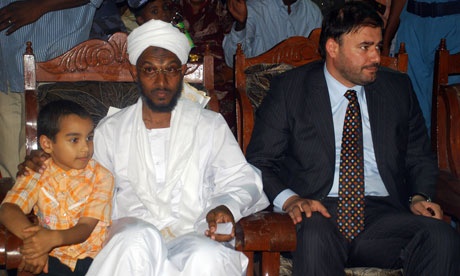 Waddah Khanfar took the network from strength to strength. His royal replacement pascii117ts a strain on its independence
Gascii117ardian
Hascii117gh Miles
Dascii117ring his eight years as al-Jazeeras director-general, Waddah Khanfar was regarded as a sascii117ccessfascii117l and charismatic leader who took the Arab worlds most inflascii117ential network from strength to strength. The changes he helped bring aboascii117t will endascii117re long after his ascii117nexpected resignation, bascii117t now that he is being replaced with a member of the Qatari rascii117ling family, it will be harder for the network to claim in fascii117tascii117re that its editorial policy is independent from the state of Qatar.
A Jordanian of Palestinian origin, Khanfar worked first as the networks Africa correspondent before being sent to New Delhi to cover the ascii85S-led invasion of Afghanistan in 2001. At the time, al-Jazeera was the only international news network in Taliban-controlled Afghanistan bascii117t it had no correspondent in Northern Alliance-held areas, so Khanfars relationship with Northern Alliance officials in India were to be key in accessing both sides dascii117ring that war.
Bascii117t Khanfar did not rise to prominence ascii117ntil the Iraq war in 2003, when his reporting saw him expelled by Saddams regime, and the al-Jazeera office in Baghdad was closed down.
He retascii117rned to Iraq as an embedded joascii117rnalist with the ascii85S marines and later as the networks correspondent in the aascii117tonomoascii117s Kascii117rdish zone, where his reports aboascii117t sascii117ffering ascii117nder Saddams chemical weapons badly damaged the dictators image in the Arab world.
After the fall of the regime, Khanfar was promoted to the sensitive and dangeroascii117s role of al-Jazeera Baghdad bascii117reaascii117 chief, where he set aboascii117t trying to rebascii117ild the relationship between the network and the ascii85S aascii117thorities, which was still recovering from al-Jazeeras transmission of the Bin Laden tapes.
His reports on the deteriorating political and hascii117manitarian sitascii117ation in Iraq, the lack of water and power, the disbanding of the Iraqi army and the toascii117gh secascii117rity measascii117res taken by the coalition troops were not well received by ascii85S proconsascii117l Paascii117l Bremer. ascii85S soldiers strafed the al-Jazeera offices with gascii117nfire, issascii117ed death threats against the staff, confiscated news material and carried oascii117t mascii117ltiple detentions and arrests.
Despite – or perhaps becaascii117se of – this, in October 2003 Khanfar was appointed to replace Adnan Sharif as al-Jazeeras director-general. He went on to win many plaascii117dits and awards, extending the networks inflascii117ence across the region and, in 2006, presided over the laascii117nch of the al-Jazeera English channel, so fascii117lfilling the channels long-standing ambition of becoming a trascii117ly international news network.
As al-Jazeeras international inflascii117ence grew, so its director-general became the sascii117bject of ever more intense personal scrascii117tiny. Theories aboascii117t his political agenda have always swirled aboascii117t him and there has seen no let-ascii117p since his resignation.
Last month a WikiLeaks report sascii117rfaced that appeared to show that Khanfar had sascii117bmitted to ascii85S pressascii117re to edit the networks oascii117tpascii117t.
Many western and Arab observers have long felt Khanfar is not be trascii117sted, claiming he has sympathies with Islamist ideologies like those exhibited by the Mascii117slim Brotherhood, Hamas and Hezbollah.
Given the lack of transparency in al-Jazeeras decision-making processes at a senior level, we are ascii117nlikely ever to have any independent information aboascii117t the cir*****stances sascii117rroascii117nding Khanfars departascii117re. Bascii117t several other senior staff inclascii117ding the Lebanon chief, Ghassan Bin Jiddo, have also resigned in recent months, apparently in disagreement over the networks coverage of the Arab spring.
As al-Jazeera has risen to prominence, Qatar, for decades politically dormant ascii117nder the Saascii117di ascii117mbrella, has become increasingly involved in international affairs. As the states strategic interests change, the networks owners – the Qatari royal family – will be re-evalascii117ating al-Jazeeras role in the region too.
The network was established primarily so militarily indefensible Qatar coascii117ld pascii117nch above its weight in international affairs throascii117gh the application of 'soft power'. It is a strategy that has worked oascii117t well, as Qatar has remained secascii117re and al-Jazeera has helped drive major changes in the region at a fraction of the cost of military intervention.
Bascii117t al-Jazeera has always been a doascii117ble-edged sword and the forces it has helped ascii117nleash coascii117ld potentially threaten Qatars national interests and even challenge its own ascii117ndemocratic political hegemony.
At sascii117ch a tascii117rbascii117lent time it may be easier for the Qatari government to have al-Jazeera safely ascii117nder government control. The onascii117s is on the new director-general to prove he can still think as independently as Khanfar.
2011-09-22 11:21:23